
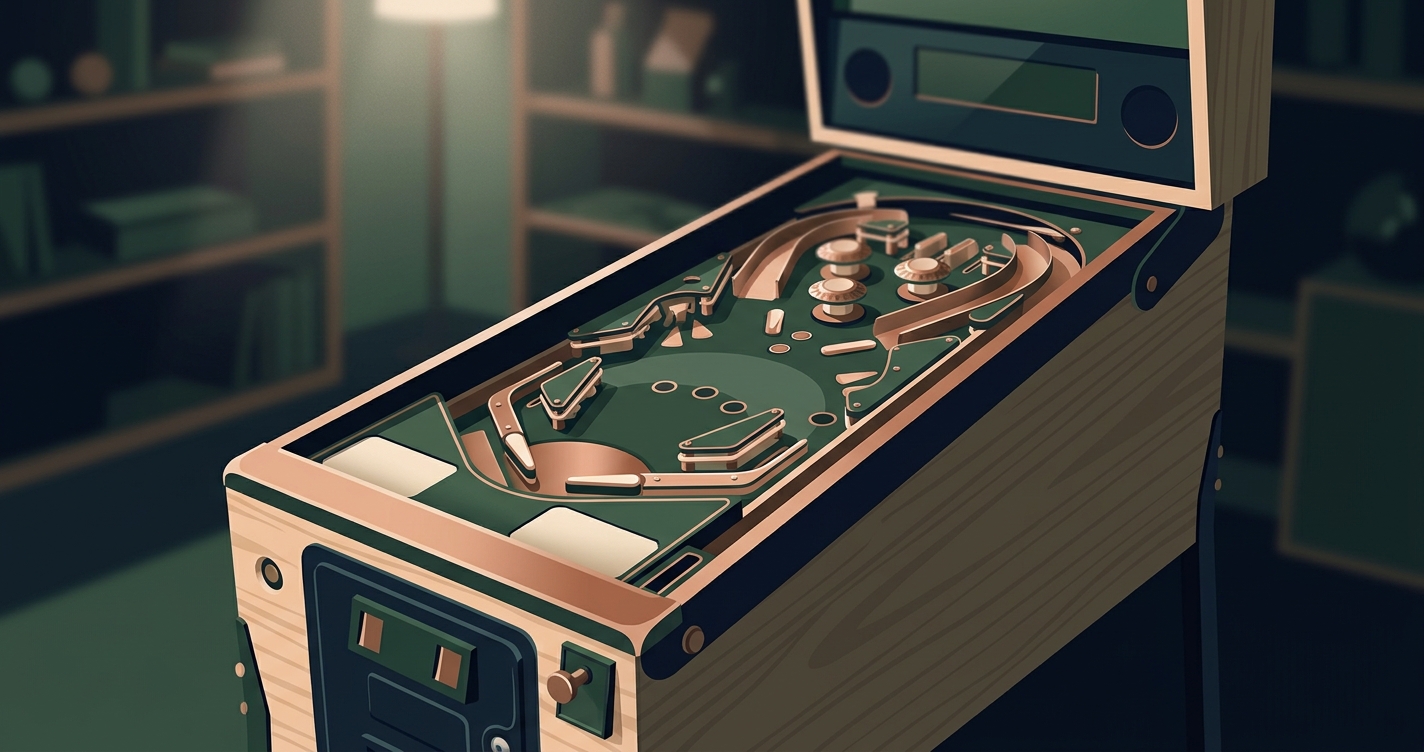
Best Pinball Themes for a Family Game Room
Key takeaways
- The best family pinball themes read clearly across ages: bright art, recognizable characters, and simple primary objectives kids can follow.
- The Addams Family sold 20,270 units, making it the best-selling solid-state pinball machine of all time (Wikipedia).
- Licensed franchises like Star Wars, Jurassic Park, and Willy Wonka give families a shared reference point that lowers the barrier to play.
- Modern machines include adjustable difficulty settings, so one cabinet can suit a curious six-year-old and a competitive adult.
- Pick a theme with layered rules, so casual play stays fun while deeper scoring keeps the machine interesting for years.
The best pinball themes for a family game room are the ones every age recognizes on sight and can start playing in seconds. Look for bright art, familiar characters, clear primary objectives, and adjustable difficulty, because those four traits let a six-year-old and a competitive adult enjoy the same cabinet without frustration.
Choosing a theme is really a choice about who plays and how often. A machine that looks incredible but plays over everyone's head gets used once and then gathers dust. This guide walks through the theme qualities that keep a family coming back, from all-ages art to licensed franchises to the difficulty settings that quietly do the heavy lifting.
What Makes a Pinball Theme Kid-Friendly and All-Ages?
A kid-friendly theme communicates its goal without words. Bright playfield art, oversized recognizable characters, and one or two obvious primary shots let a child understand what to aim for on the first ball. That clarity is what separates a machine kids beg to play from one they abandon after a turn.
All-ages appeal comes from layered readability. The surface layer is visual: color, motion, and sound that pull a young player in. The deeper layer is rule structure that rewards curiosity as skills grow. Themes built around adventure, animals, space, or comedy tend to land well because the subject matter is friendly and the callouts stay upbeat.
Sound and light design matter more than many buyers expect. A machine that celebrates small wins with satisfying audio and flashing inserts keeps younger players engaged even when their scores are low. If you are new to how these systems work together, our overview of how pinball machines work breaks down flippers, bumpers, and scoring in plain terms.
Signs a Theme Will Work for Every Age
- Art reads clearly from a few feet away, not just up close
- One or two main shots are obvious without studying the rules
- Callouts and music are energetic and family-appropriate
- The subject is broadly loved, not aimed at one narrow fanbase
How Do You Balance Nostalgia With Modern Gameplay?
Balance nostalgia with modern gameplay by choosing a theme parents love wrapped around hardware and code that stays engaging. Older recreations can feel charming but shallow, while modern machines layer deeper rule sets, dynamic lighting, and connected features on top of familiar subjects. The sweet spot is a theme that feels timeless with rules that reward repeat play.
Nostalgia is a powerful hook for the adults writing the check. A theme tied to a beloved movie, band, or era instantly creates a reason to gather around the machine. That emotional pull is why classic themes keep getting remade for new generations of hardware.
Modern gameplay is what keeps the machine from getting stale after the novelty fades. Newer titles offer progressive objectives, multiple modes, and scoring that rewards skill development. A family can enjoy the theme on day one and still be discovering new shots months later, which is exactly the longevity you want in a game room centerpiece.
Which Licensed Franchise Machines Do Families Love?
Families gravitate toward licensed franchise machines because a shared reference point makes the game instantly approachable. When a child already knows the characters from a movie or show, they walk up ready to play instead of hesitating. That recognition is the single fastest way to lower the barrier to a first game.
The most family-friendly licensed themes tend to come from broad, all-ages franchises. Adventure and sci-fi properties like Star Wars and Jurassic Park pull in kids and parents alike, while candy-and-comedy themes such as Willy Wonka skew even younger. Superhero and monster-movie titles add excitement, though a few lean toward older players, so it helps to match the specific title to your household.
One theme proves how far broad recognition can carry a machine. The Addams Family, released by Bally in 1992, sold 20,270 units and remains the best-selling solid-state pinball machine of all time (Wikipedia). Its blend of a recognizable property with approachable, satisfying shots is a blueprint worth studying when you shop for a family title.
Questions to Ask About a Licensed Theme
- Does everyone in the household recognize the property?
- Is the content age-appropriate for your youngest player?
- Are the main objectives tied to memorable moments from the source material?
- Will the theme still feel relevant a few years from now?
Do Difficulty Settings Keep Everyone Engaged?
Difficulty settings are the reason one machine can serve an entire household, and modern cabinets make them easy to adjust. Standard software menus let owners change the number of balls per game, tilt warnings, extra-ball score thresholds, and how hard specific modes are to reach, according to guidance from Home Leisure Direct on adjusting a pinball machine's difficulty.
Software is only half the picture. Physical adjustments also shape difficulty, including tilt-bob sensitivity and the position of the outlane posts, which can be set to more forgiving or more punishing configurations. Together these controls let you dial a machine from gentle to genuinely challenging.
For a family, this flexibility is transformative. You can set a generous ball count and relaxed drains so a young child feels the thrill of a long game, then switch to a tougher profile for adult game nights. The same hardware grows with each player instead of forcing everyone into one skill bracket.
Simple Settings to Start With
- Increase balls per game for younger or newer players
- Loosen tilt sensitivity so enthusiastic nudging is forgiven
- Lower score thresholds for extra balls to extend play
- Save a tougher profile for competitive adult sessions
How Do You Choose a Theme That Grows With Your Household?
Choose a theme that grows with your household by prioritizing broad appeal and layered rules over a single narrow interest. A machine centered on one child's current obsession may lose its shine when that phase passes, while a widely loved theme with deep scoring keeps drawing players as kids age and skills develop.
Think about the next several years, not just today. A toddler-focused theme has a short runway, but an all-ages adventure or comedy title can stay relevant from early childhood into the teen years and beyond. The goal is a purchase that still earns its floor space long after the novelty wears off.
Rule depth is the other half of longevity. Themes with progressive objectives and multiple scoring paths reward growing skill, so the machine that entertained a beginner still challenges the same player years later. When you are ready to weigh specific models and features, our home pinball machine buying guide covers what to look for in build quality, code depth, and value. Pinballmachinesinc carries both new and used machines across these themes, which makes it easier to match a title to your family before you commit.
A Quick Framework for Long-Term Value
- Favor themes everyone recognizes over single-fan interests
- Confirm the rules have depth beyond the first few shots
- Check that difficulty can scale up as players improve
- Consider resale and broad appeal if tastes change
Matching the Theme to Your Family
The strongest family pinball choice combines a theme everyone recognizes, art and objectives young players can read instantly, and difficulty settings that scale from a first-timer to a competitive adult. Get those three right and the machine becomes a gathering point rather than a one-week novelty.
Your next step is practical: make a short list of two or three broadly loved themes your household already knows, then confirm each machine offers adjustable difficulty and layered rules before you buy. Play them if you can, set an easy profile for the youngest player, and pick the cabinet that gets the whole family reaching for the flippers.
Frequently asked questions
What is the best pinball theme for young kids?
Bright, character-driven themes work best for young kids because the art and objectives are easy to read. Family-friendly licensed titles and colorful original themes with clear primary shots let children understand what to aim for without reading complex rules.
Can one pinball machine work for both kids and adults?
Yes. Most modern machines include adjustable difficulty settings that change ball count, tilt sensitivity, and how hard scoring modes are to reach. You can set an easier profile for children and a tougher one for competitive adults on the same cabinet.
Are licensed pinball machines worth it for families?
Licensed machines are often worth it for families because a shared reference point makes the game instantly approachable. A theme everyone recognizes lowers the barrier to that first game and encourages repeat play across ages.
What is the best-selling pinball machine of all time?
The Addams Family, released by Bally in 1992, is the best-selling solid-state pinball machine of all time with 20,270 units produced. Its wide recognition and approachable rules made it a lasting favorite.
No comment