
Used Pinball Machines for Sale: Smart Buyer Tips
Key takeaways
- Always play a used pinball machine before buying so you can confirm the flippers, switches, and display work under real conditions.
- Used solid-state and 1990s titles commonly sell in the $3,000 to $5,000 range, while rough project machines cost far less because they need work.
- Reconditioned machines carry a documented service history, while as-is machines transfer every hidden fault to the buyer.
- Board corrosion, worn playfields, and missing parts are the most expensive problems to fix and the easiest to spot early.
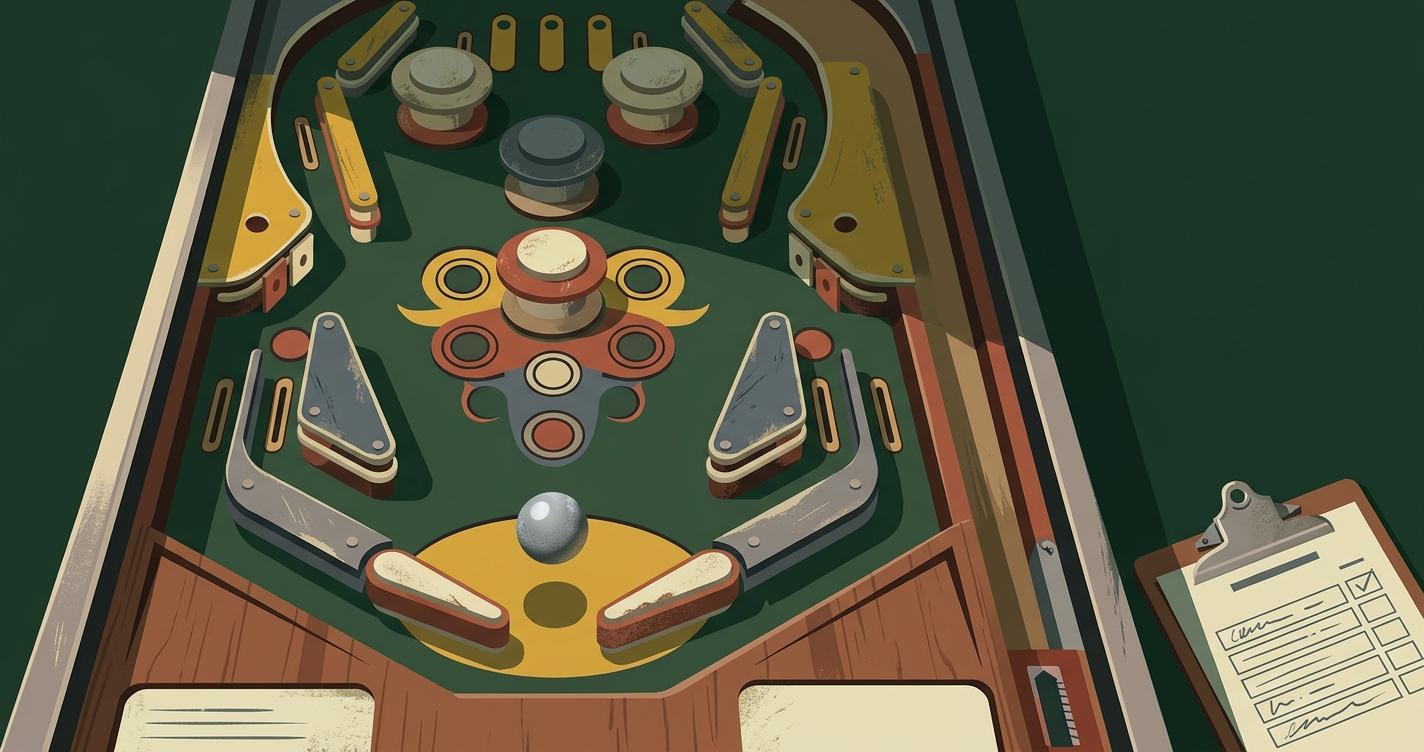
The smartest way to buy a pre-owned pinball machine is to play it before you pay and inspect the playfield, boards, and cabinet with a checklist in hand. Do that, compare the asking price against real sales for the same title, and you will avoid the two mistakes that catch most first-time buyers: overpaying and inheriting a machine that needs expensive repairs.
Used machines are a large and active part of the hobby. The global pinball market reached roughly $245 million in 2022, according to industry data compiled by World Metrics, and a healthy share of that activity happens between private sellers and collectors trading pre-owned games. That means good deals exist, but so do overpriced projects dressed up to look ready to play. This guide walks through what to check, what to pay, and how to close the deal with confidence.
What to Inspect Before Buying a Pre-Owned Machine
A pinball machine has hundreds of moving parts, so a quick glance tells you very little. Ask to power the game on and play several full games before you talk price.
Work through the machine in layers:
- Playfield. Look for wear spots, flaking artwork, and planking around high-traffic areas like the shooter lane and under the flippers. Surface wear is normal on older games, but bare wood and lifting clearcoat point to heavier restoration work.
- Flippers and switches. Every flipper should snap crisply. Roll the ball into targets and ramps to confirm switches register. Weak or sticky flippers usually mean worn coil sleeves or dirty contacts.
- Displays and lighting. Confirm the score display is bright and complete, with no dead segments. Check that general illumination lights up evenly.
- Cabinet and legs. Inspect for water damage, warping, and rust on legs and bolts, which can hint at how the machine was stored.
- Under the playfield. Lift it and look at the wiring, coils, and circuit boards. This is where the most expensive surprises hide.
If you are newer to the hobby, understanding the mechanics first makes inspection far easier. Our overview of how pinball machines work explains the systems you are checking, so you know what a healthy machine should sound and feel like.
Fair Pricing Benchmarks for Vintage and Modern Titles
Price depends on era, title desirability, and condition more than age alone. Use these general benchmarks as a starting point, then verify against recent sales of the exact game you want.
- Electromechanical games (pre-1978). These vintage machines vary widely. Clean, working examples of common titles trade modestly, while rough project machines change hands cheaply because they need real work.
- Solid-state and 1990s titles. These sell most often in the $3,000 to $5,000 range for working machines, according to pricing benchmarks published by the retailer research site Retro Only. Popular titles from this era command the top of that band.
- Modern machines. A new machine from a current manufacturer starts near $9,800 before tax and freight, per the same source, so recent used models tend to price at a meaningful discount to new while holding value well.
Two forces push a specific game above or below these ranges. The first is demand for the title itself, since collector favorites carry a steady premium. The second is condition, since a fully working machine is worth far more than one with a tired playfield or flaky electronics.
Modern used games also tend to be more reliable in the lighting department. LED lighting appeared in about 90 percent of new machines by 2022, up from roughly 20 percent in 2017, based on the same World Metrics industry data cited above, so a newer used title is less likely to need bulb-heavy maintenance than an older solid-state game.
Reconditioned vs. As-Is: What the Difference Means
These two labels describe very different purchases, and the price gap between them is usually justified.
A reconditioned machine has been serviced by someone who addressed known problems: cleaned or replaced worn parts, tested the electronics, and often shopped the playfield. A reputable seller can tell you exactly what was done and show you a working game. You pay more, but you inherit fewer surprises.
An as-is machine transfers every fault, known and unknown, to you. As-is can be a genuine bargain when the game plays well and the discount reflects honest condition. It becomes a trap when a seller uses the label to avoid disclosing problems. The rule is simple: the deeper the discount, the more thoroughly you must test and budget for repairs.
Repair costs span a wide range. Individual fixes run from about $5 for small parts to $1,500 or more for major cabinet and board work, according to a repair cost breakdown published by Pinball Castle. A cheap as-is machine can quietly cost more than a reconditioned one once you tally the parts and labor to make it right.
Red Flags That Signal Costly Repairs Ahead
Some problems are cosmetic and cheap. Others hint at deep repairs that can equal the price of the machine. Watch for these warning signs.
- Corroded circuit boards. Green or white crust near battery holders is the single most serious red flag. Battery leakage damages traces and can require board rebuilds.
- Dead display segments. A display with missing or dim segments may need a costly replacement, especially on 1990s dot-matrix games.
- Heavy playfield wear or damage. Bare wood, deep planking, and previous bad touch-ups signal expensive restoration rather than a simple cleaning.
- Missing or wrong parts. Substituted plastics, mismatched ramps, and absent lamps add up quickly and can be hard to source for older titles.
- A seller who will not power it on. If a machine cannot be demonstrated playing, treat the asking price as if the game does not work at all.
None of these automatically kill a deal. They simply tell you to lower your offer to reflect the repair bill you are taking on.
How to Buy Used Pinball Machines With Confidence
Confidence comes from preparation, not luck. Bring a plan to every viewing.
- Research the exact title first. Know what your specific game sells for in working condition so you can spot a fair price fast.
- Play it, then inspect it. Games first, checklist second. Real play reveals faults a static inspection misses.
- Match price to condition. Start from the benchmarks above and subtract for every issue you find.
- Confirm what is included. Manuals, keys, spare parts, and legs all add value and save you money later.
- Buy from sellers who stand behind the machine. A seller who documents service history and answers questions directly is worth a premium over an anonymous listing.
For a deeper look at matching a machine to your room, budget, and play style, our home pinball machine buying guide covers placement, power, and long-term ownership costs in detail.
If you would rather skip the guesswork, buying from an established dealer changes the equation. At Pinballmachinesinc, used machines are inspected and serviced before sale, which removes much of the risk that comes with private as-is listings. Your next step is to decide which type of machine fits your space and budget, then compare a serviced dealer game against the private listings you find. Pick the one that gives you the most working pinball for your money, and you will start playing sooner with fewer repairs ahead.
Frequently asked questions
How much should I pay for a used pinball machine?
Used solid-state and 1990s titles commonly sell in the $3,000 to $5,000 range, while rough non-working project machines sell for much less. Sought-after collector titles can run well above these figures.
Is it safe to buy a used pinball machine as-is?
It can be, but you accept every hidden fault. Inspect and play the machine thoroughly first, and budget for repairs, since parts and labor can range from a few dollars to well over a thousand.
What is the biggest red flag on a used pinball machine?
Corroded circuit boards are the most serious warning sign. Battery leakage and green residue on boards often point to repairs that can cost hundreds of dollars.
Should I buy a reconditioned or an as-is pinball machine?
A reconditioned machine with a documented service history usually costs more but reduces surprise repairs. An as-is machine suits buyers who can test and service it themselves.
No comment